



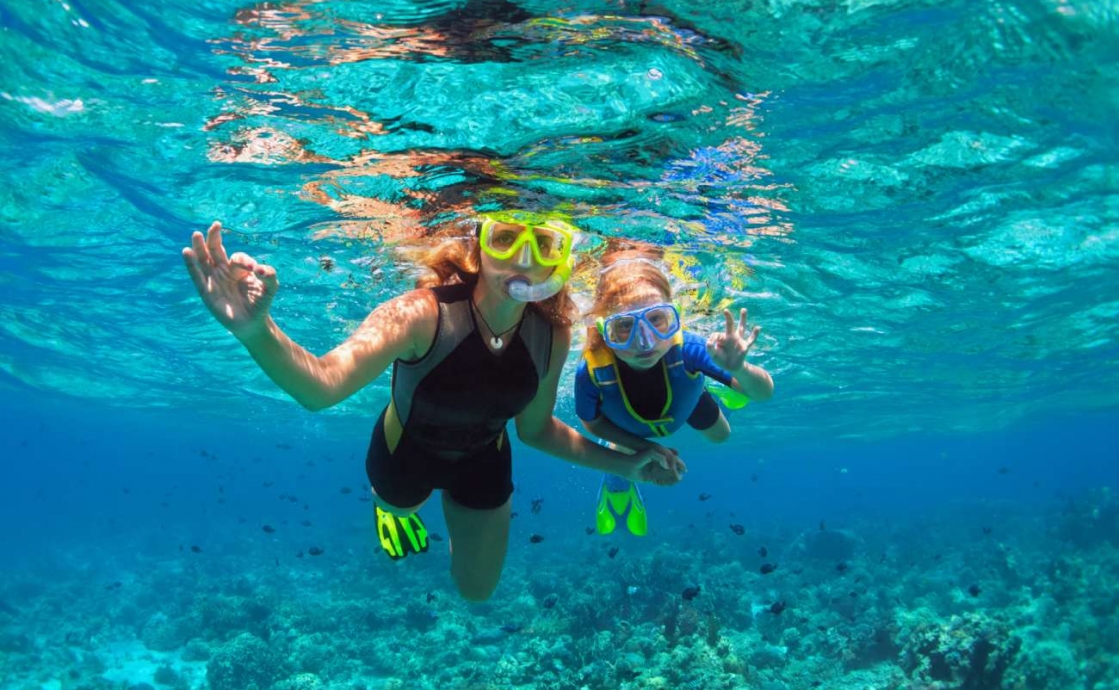
The Mediterranean Beneath the Surface: Snorkelling in the Waters of Port d'Andratx
There is a moment, just as your face slips under with the mask on, when the world changes scale. The rush of the surface disappears and another landscape appears: rocks draped in seaweed, shoals of silvery fish moving as one, and that characteristic blue-green of the seagrass meadows carpeting the seabed. In the south-west of Mallorca, snorkelling requires neither a boat nor specialist equipment: a mask, snorkel, fins and one of the coves around Port d'Andratx are all you need.
A seabed that looks after itself
The reason these waters are so clear has a scientific name: Posidonia oceanica, the Mediterranean's native seagrass, whose meadows fall within both the UNESCO World Heritage listing for the Serra de Tramuntana and the Isla Dragonera marine reserve. These meadows oxygenate the water, slow coastal erosion and shelter an entire community of marine life: sargo bream, gilt-head bream, comber, juvenile groupers and the occasional octopus tucked between the stones. Swimming above them, with no tank or diving course required, is like stepping into one of the island's best-preserved ecosystems. That said, always swim over the seagrass rather than on it — treading on it or pulling it up does real damage, and it takes a very long time to recover.
Cala Llamp, the classic just steps from the port
The cove closest to La Pérgola is also one of the most rewarding for snorkelling. Its smooth rock platforms slope down into clear water, and you don't need to venture far to find life: small shoals of fish dart between the crevices in the rock, and the clarity of the water lets you see the seabed even several metres down. As it's a well-known cove that draws boats throughout the day, the best time to explore it in peace — and see something other than other people's fins — is early morning.
Towards Sant Elm: Cala en Basset and Cala s'Algar
Following the coast westwards, towards Sant Elm, the underwater scenery becomes more varied. Cala en Basset, reached after a twenty- to thirty-minute walk through pine trees, offers a seabed of large boulders facing the silhouette of Sa Dragonera, perfect for a leisurely explore. Close by, Cala s'Algar hides a smooth stone slab and a seaweed-covered floor where gilt-head bream and comber are almost always active. Both coves are just a short walk from Sant Elm, a good spot to round off the day with a stroll through the village before heading back.
Camp de Mar, snorkelling with home comforts
For those who prefer less walking and more amenities, Camp de Mar combines fine sand and calm water thanks to its sheltered bay, along with rocky patches at either end where snorkelling also works well, particularly near the small islet facing the beach.
Before you get in the water
A well-fitted mask, a simple snorkel and a pair of short fins are all you need — nothing more elaborate is required. Enter and exit the water over rock or sand rather than seagrass, wear water shoes on the stony stretches, and choose calmer hours — usually the morning — for maximum visibility. If you'd like to go beyond the surface and properly explore the depths of the south-west, our article on diving experiences in Mallorca is worth a read; and for those who'd rather cover some coastline before getting in the water, pairing snorkelling with a kayak or paddleboard is a great way to string several coves together in a single morning.
Back to La Pérgola
The best way to end a morning's snorkelling is always the same: a shower to rinse off the salt, a dry towel, and the certainty of having glimpsed, even for just an hour, a stretch of the Mediterranean that most beachgoers never imagine exists beneath their feet. From La Pérgola, all of these coves are just minutes away, ready for your next dip.