



Sa Dragonera Excursion: The Nature Reserve Crowning the South-West
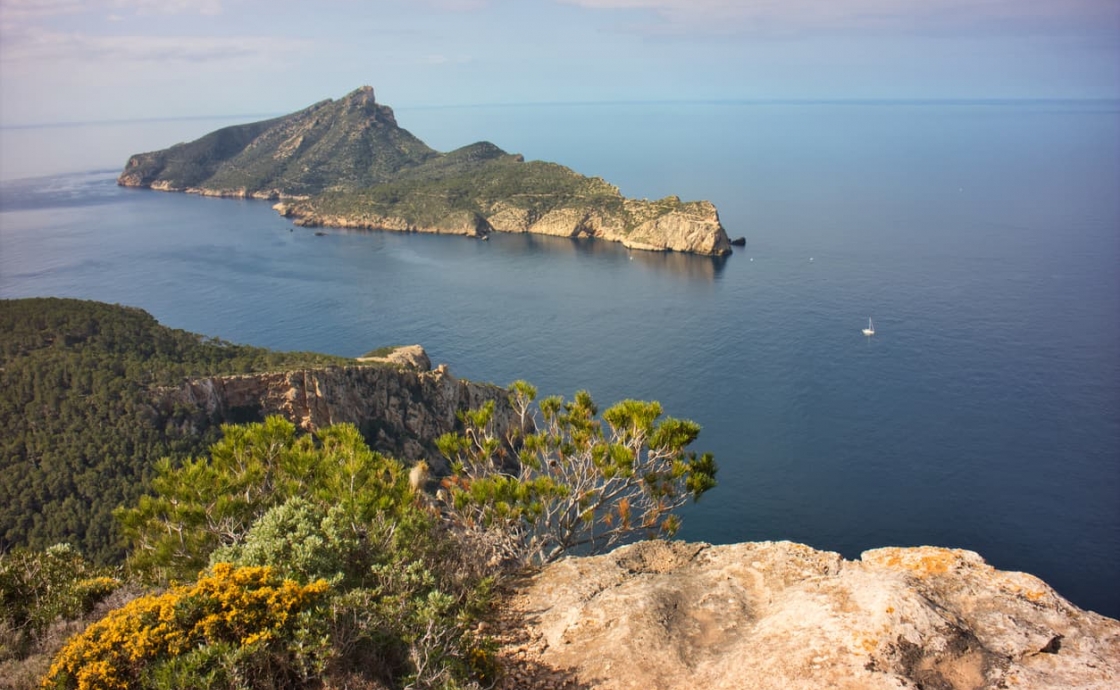
There's a silhouette that keeps every sunset company in the south-west of Mallorca: long, rugged, shaped like a sleeping dragon on the sea. It's Sa Dragonera, and from La Pérgola you only need to head to Sant Elm to board a boat across.
Crossing into a different world
The crossing takes barely a quarter of an hour, yet it crosses a whole world. In that narrow channel of clear water known as es Freu, posidonia seagrass tints the seabed an almost electric blue before the island — protected as a nature reserve since 1995 — starts to rise ahead of the bow. Landing takes place at Cala Lledó, next to the park's information centre, an essential stop before choosing a route.
The island's trails
Sa Dragonera offers several signposted trails, all free to access:
- oNa Miranda: the easiest, a circular half-hour stroll through old cultivated terraces now turned into a wildlife refuge.
- oFar de Tramuntana: a gentle walk with views towards the cliffs of Sant Elm and the start of the Serra de Tramuntana, the same UNESCO World Heritage mountain range visible from the Cap de sa Mola viewpoints.
- oFar de na Pòpia: the most demanding route, around two hours' climb to the island's highest point — over 350 metres — crowned by the ruins of the old lighthouse, with the Mediterranean stretching out in every direction.
For those who'd rather discover it from the water, it can be paired with a kayak or paddleboard loop around the cliffs — an entirely different perspective on the same island.
Wildlife, history and silence
There are no cars, no buildings beyond the 16th-century watchtowers and the three lighthouses that guided south-west sailors for generations. There is, however, life: the Balearic wall lizard, an endemic species found on almost every trail, while falcons and Audouin's gulls nest on the cliffs, especially visible during the spring and autumn migrations.
The island also holds a singular history: it was here that Jaume I landed in 1229, before conquering Mallorca, and centuries later, in the 1970s, a citizens' movement stopped it becoming a tourist resort, paving the way for it to become one of the best-preserved spaces in the Mediterranean today.
Before you set off: what to know
There are no bars or restaurants on the island, so it's worth packing water and something to eat — much the same as for a day exploring hidden coves — along with comfortable footwear and sun protection, as most trails offer no shade. Access includes a small conservation fee, and boat and visiting times vary by season, so it's always worth checking beforehand, either at the park's information centre or on illesbalears.travel. It's also a plan that works well as a family, in keeping with other relaxed plans from Port d'Andratx.
Back to La Pérgola
Coming back after a day like this feels special: salt still on your skin, the island once again a distant silhouette, and the sense of having spent a few hours in one of the last truly wild corners of the Mediterranean.