



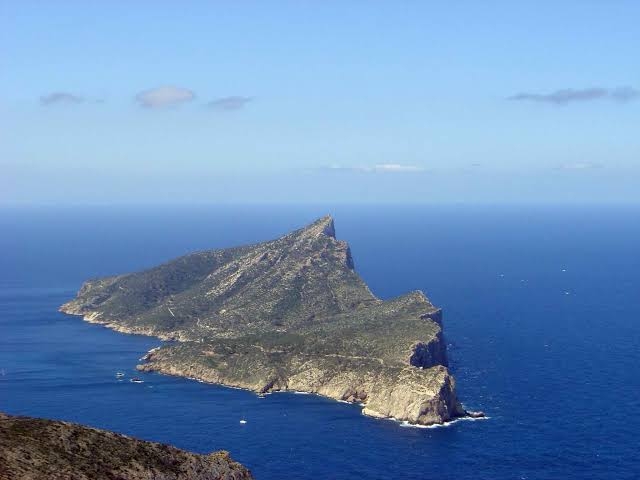
Autumn Migration on Sa Dragonera: When the Sky Fills with Wings
Off the coast of Sant Elm, Sa Dragonera seems to sleep all year round, its stony back stretched out across the sea. But when autumn arrives, the dragon wakes. The days grow shorter, the light turns golden and the island's paths recover their calm. High above them, something happens that most people never notice: thousands of birds crossing the Mediterranean on their way to Africa, filling the skies of south-west Mallorca with wings for a few short weeks.
The Last Land Before the Open Sea
The explanation lies on the map. Sa Dragonera sits at the far south-western tip of Mallorca, and a large share of the migratory flow crossing the island is funnelled through this point. For a bird heading south, it is the last shore before the open sea. For one arriving tired, it is a place to recover its strength. It is no coincidence that the whole park, together with a wide stretch of sea, is designated a Special Protection Area (SPA) for birds within the Natura 2000 network.
The official Natural Park page makes it clear: October, along with April, is when migration reaches its peak. It is the best time to discover the wealth of birdlife the island holds.
Eleonora's Falcon, the Host Awaiting the Travellers
If Sa Dragonera has a leading character, it is Eleonora's falcon (Falco eleonorae), known to Mallorcans as the falcó marí. It spends the winter in Madagascar, thousands of kilometres away, and returns to the island's cliffs every spring to breed. This is home to the largest population of this raptor in the entire archipelago.
Its secret is patience. According to SEO/BirdLife, this falcon waits until late July or early August to breed. That way, its chicks hatch just as small migratory birds begin to pass through, which the adults hunt over the sea to feed them. By mid-September the chicks are growing on the cliffs, and with the autumn migration the whole colony sets off on its own journey south. During the first weeks of autumn, you can still see them gliding along the rock faces.
The Migration That Happens at Night
Much of this journey takes place while we sleep. In 2021 and 2022, Sa Dragonera hosted the first study of nocturnal bird migration ever carried out in the Balearic Islands. A recorder installed beside the Far de Llebeig captured, night after night, the calls of birds crossing the island in the dark. In the first season alone, 6,671 birds of 70 species were identified, 13 of which had never before been recorded in the park. In autumn, the most abundant species was the song thrush, followed by the western yellow wagtail and the robin. The full report is available on the Sa Dragonera Blava website.
By day, the soundtrack is provided by yellow-legged gulls. With a little luck and a pair of binoculars, you may also spot Audouin's gull or the Balearic shearwater, one of the few bird species endemic to the islands.
How to Go Out and Meet the Birds
From Port d'Andratx, Sant Elm is around 15 minutes by car, and from its small quay the boat takes another quarter of an hour to reach Cala Lladó. It is worth catching the first sailing of the morning, when the birds are most active and the light is softer. Bring binoculars, water and something to eat, as there are no facilities on the island.
Once ashore, the path to the Far de Llebeig runs south across the island and leads to the very spot where the nocturnal migration was recorded. If lighthouses appeal to you, you will find more ideas in our route around Mallorca's most beautiful lighthouses.
Before setting off, it is a good idea to check the timetables on the Consell de Mallorca website. Regular boats run roughly from March to October, and the park adjusts its opening hours according to the season. Once there, always stick to the waymarked paths, as the cliffs are home to many of these birds.
You do not even need to land to experience the migration. An autumn afternoon on the Sant Elm coast, watching the sky as the light fades, can be just as memorable. And if you would like to meet other island residents, such as Lilford's wall lizard, we introduce them in 7 native animals you will only see in Mallorca.
An Autumn for Looking Up
Autumn migration reminds us that Mallorca is part of a journey far bigger than the island itself. When you return from Sa Dragonera, our rooms are waiting for you to unwind, and at reception we will help you plan your excursion through our services. Questions about dates or transfers? Get in touch and we will plan your autumn in south-west Mallorca together.