



The Mare de Déu de la Trapa: The Tradition That Closes Summer in s'Arracó
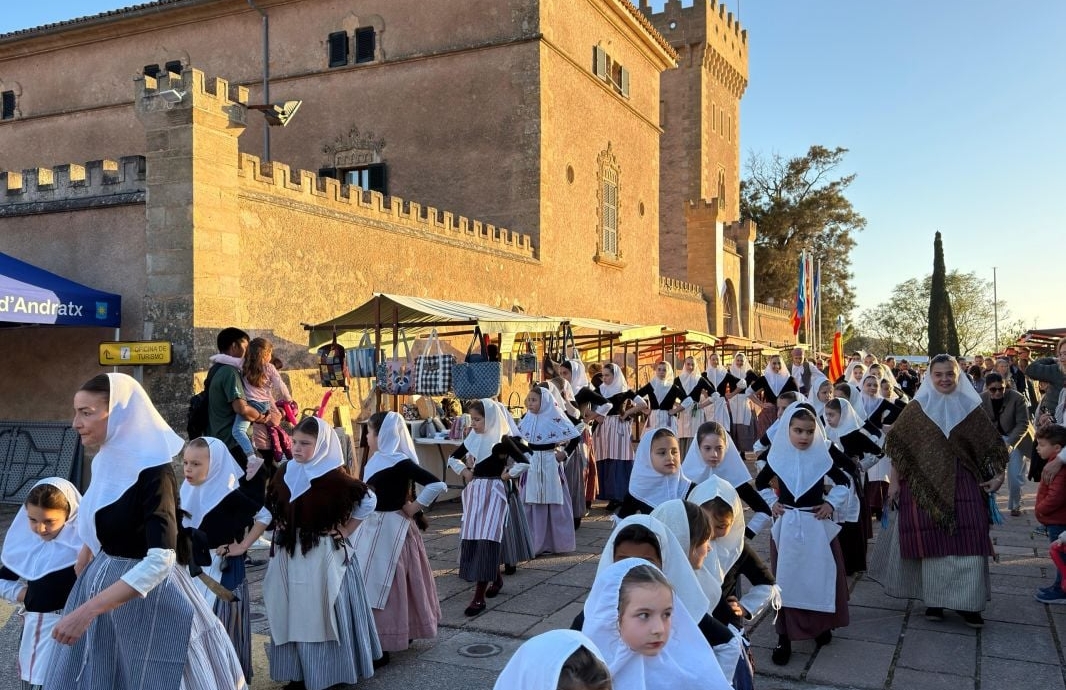
Inland, beyond s'Arracó, summer in Andratx doesn't end with just any farewell. It ends with a procession. Every 8 September, the village dresses up to accompany the Mare de Déu de la Trapa through its streets, in what the Andratx Town Hall itself describes as the event that closes the municipality's entire calendar of patron saint festivities. It's a tradition few visitors ever witness, and one that begins long before that September evening — in a hidden valley of the Serra de Tramuntana.
A Valley Named After Monks
In 1810, fleeing the French Revolution, a community of Trappist monks arrived in Mallorca. Canon Pere Roig granted them land in what was then known as the Sant Josep de s'Arracó valley. The monks, who had taken a vow of silence, transformed the spot into a small oasis: they built dry-stone terraces and water-catchment channels, and raised a monastery of which only ruins remain today. Only the "bread friar", tasked with collecting alms, kept contact with the outside world, living in a hut near Cala Sanutges.
The order dissolved just a few years later, and the estate — covering some 81 hectares — passed through private hands until falling into disuse by the mid-20th century. Faced with the threat of development, the environmental group GOB campaigned to protect the land, which today holds the status of Natural Site and Special Conservation Area, and forms part of the Serra de Tramuntana UNESCO World Heritage site. Anyone who completes the walk up to the La Trapa viewpoint — accessible from Sant Elm, with a moderate but steady climb — is rewarded with one of the south-west's most celebrated views: the silhouette of Sa Dragonera, outlined against the sea like a sleeping dragon.
The Procession That Closes the Summer
It's from that valley, and the devotion that took root there, that the Mare de Déu de la Trapa takes her name — patron of the s'Arracó festivities alongside Sant Agustí. Over several weeks at the end of summer, the village holds solemn Masses, traditional games and folk dance performances, building up to the most eagerly awaited moment: the evening of 8 September, when the image of the Mare de Déu is carried through the streets in procession. It's one of the most cherished occasions for the raconers, as s'Arracó's residents are known — and, for the rest of the municipality, the sign that Mallorca's festive summer has come to a close.
s'Arracó, the Village That Faces the Mountains
Unlike Andratx's old town, with its 13th-century church and busy shopfronts, s'Arracó has a different rhythm: that of a small, agricultural settlement, leaning against the Tramuntana and a short hop from Sant Elm and La Trapa itself. Wandering its streets outside festival time means encountering a less-photographed side of Mallorca: stone houses, vegetable gardens, and the sense of being much further from the sea than you actually are — the coast is, in fact, just minutes away.
A Different Kind of Afternoon, a Short Drive from Home
Combining the walk up to La Trapa with an afternoon in s'Arracó — and, should the dates line up, the 8 September procession — is a way to discover a side of Andratx that barely features on most itineraries. It's just a few minutes' drive from our aparthotel. And after the walk and the village, our rooms are waiting for you to rest, while our team will be glad to help you plan the route through our services. Get in touch with us if you'd like a hand planning the visit.